Glass Mug Size Guide: Which Capacity Is Right For Your Drink?
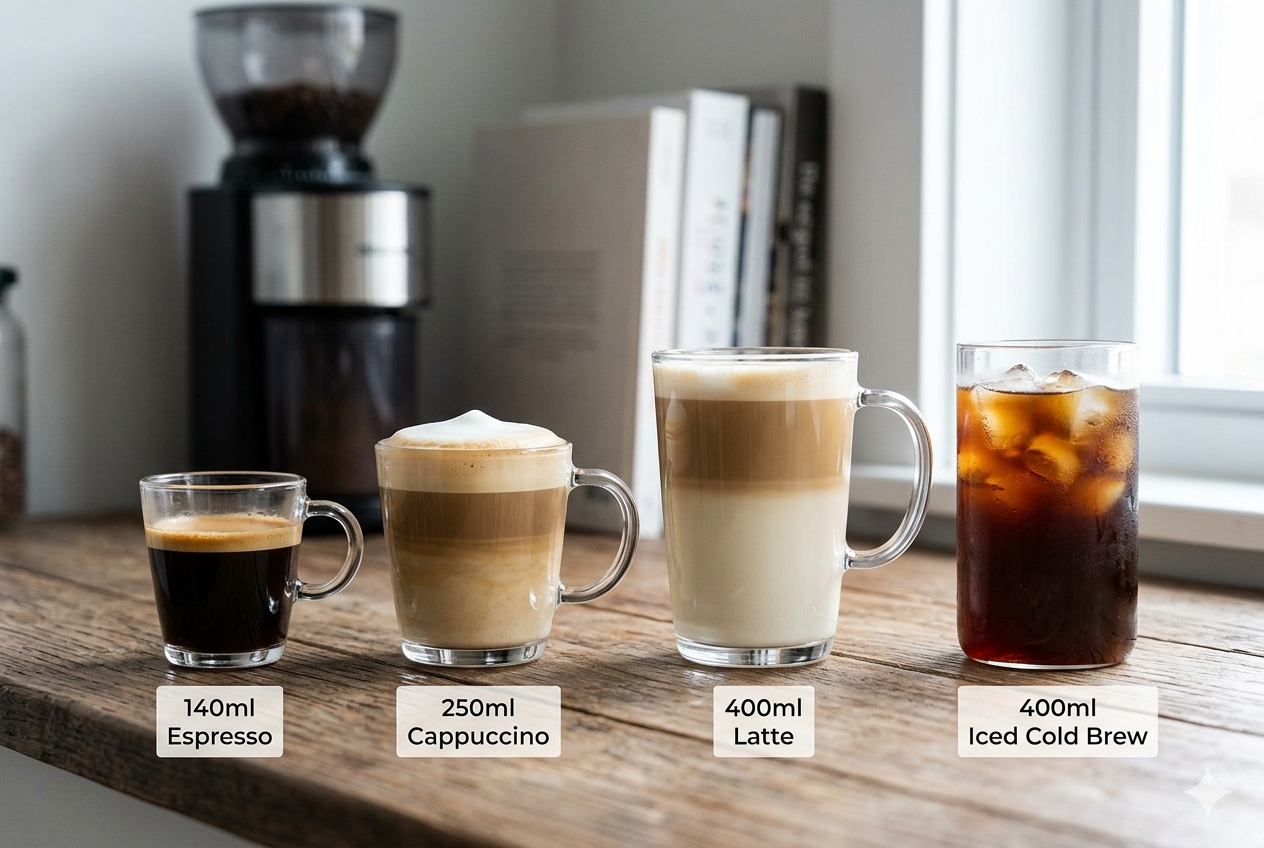
Choosing the right glass mug sounds simple — until you are standing in front of a shelf of options ranging from 140ml to 600ml and genuinely unsure which one is right for your morning cappuccino, your afternoon masala chai, or your evening cold brew. The size of your cup matters far more than most people realise. Too small, and your latte spills before you even add the froth. Too large, and your espresso turns cold and lost at the bottom of an oversized vessel before you have taken your second sip.
This guide takes the guesswork out of the equation entirely. Whether you are a dedicated espresso drinker, a latte lover, a chai enthusiast, or someone who switches between hot and cold drinks depending on the season, there is a perfect capacity for every drink you make. By the end of this guide, you will know exactly which size to choose — and why it makes a genuine difference to the quality and enjoyment of every cup.
Why Glass Mug Size Actually Matters
Before we get into the specific sizes, it is worth understanding why capacity matters so much when choosing a glass mug. It comes down to three things: temperature, proportion, and visual experience.
Temperature
Temperature is perhaps the most important factor. A smaller vessel retains heat concentration better for short drinks like espresso, where you want the coffee to stay hot for the three to four minutes it takes to drink it. A larger cup, however, is better suited to drinks with more volume — like a latte or a filter coffee — where you need adequate space for the liquid without the drink cooling too quickly against a large surface area.
Proportion
Proportion is the second factor. A well-made espresso in a 400ml vessel looks and feels wrong — the small amount of liquid sits at the bottom of a vast container, the crema dissipates quickly, and the visual pleasure of the drink is completely lost. Conversely, a full latte poured into a 140ml glass mug is simply impractical — there is no room for the steamed milk, the froth, or the visual layering that makes a latte such a satisfying drink to prepare and enjoy.
Visual experience
Visual experience is the third factor — and with clear glassware, this matters more than it does with ceramic or opaque drinkware. One of the greatest pleasures of drinking from a clear glass vessel is being able to see the layers of your drink: the dark espresso at the base, the gradient of steamed milk rising through it, the pale foam crown at the top. Choosing the right size for each drink type ensures that this visual experience is preserved and celebrated rather than compressed or lost.
Standard Drink Volumes You Need To Know
To choose the right capacity, you first need to know the standard volumes for the drinks you make most often. Here is a quick reference guide:
- Espresso and Ristretto — 30 to 60ml – A very small, concentrated volume that requires a correspondingly small vessel.
- Short Black or Doppio — 60m – A slightly larger espresso-based drink, still best served in a compact glass mug.
- Cappuccino and Flat White — 150 to 180ml – Enough room for a single espresso shot plus steamed milk and a generous layer of froth.
- Latte — 200 to 250ml – Sometimes more if you prefer a milkier, more generous drink.
- Filter and Drip Coffee — 200 to 300ml – A longer, slower drink that benefits from a medium to large glass mug.
- Masala Chai and Spiced Tea — 150 to 200ml – Depending on preparation style and personal preference, a medium glass mug works best.
Understanding these volumes is the foundation for choosing the right glass mug for every drink in your daily rotation.
140ml Glass Mug — The Espresso Specialist
Our Clear Glass Coffee Mug Set of 6 at 140ml is sized with real precision for espresso drinkers. At 140ml, this glass mug is perfectly proportioned for espresso, ristretto, and short black — giving the small volume of liquid enough room to breathe and be appreciated without being lost in an oversized vessel.
Why 140ml Works For Espresso
The small capacity serves a very specific purpose beyond just holding the right amount of liquid. It keeps your espresso hot for exactly the right amount of time — the few focused minutes a well-pulled shot should take to drink. A larger vessel would allow the heat to dissipate too quickly across a greater surface area, cooling your espresso before you have finished it.
The Visual Advantage Of A Clear Espresso Glass Mug
The clear glass construction adds a dimension of enjoyment that is impossible with ceramic espresso cups. You can see the full crema layer in complete detail — its colour, its thickness, the way it sits on the surface of the shot. For espresso enthusiasts who have invested in a good home machine, this visual transparency adds a genuine layer of appreciation to the ritual of every single shot. This size also works beautifully for ristretto — the shorter, more concentrated cousin of espresso that uses half the water for the same amount of coffee grounds.
200–250ml Glass Mug — The Cappuccino And Chai Sweet Spot
For cappuccinos, flat whites, and classic Indian masala chai, the 200 to 250ml glass mug is the ideal choice. This capacity hits the cappuccino sweet spot — enough room for a single shot of espresso plus the right volume of steamed milk and a generous, stable layer of foam, without so much extra space that the drink feels underwhelming or poorly proportioned.
Cappuccino And Flat White In A 200ml Glass Mug
A cappuccino at this size looks exactly as it should — the dark espresso visible at the base through the clear glass, a middle layer of creamy steamed milk rising through it, and a domed crown of microfoam at the top. The visual layering is preserved and beautiful. The drink stays warm throughout because the volume is concentrated enough to retain heat without requiring an insulated vessel.
Masala Chai In A Glass Mug — A New Perspective On A Classic Drink
For masala chai and spiced Indian teas, this size also works exceptionally well. A traditional masala chai is brewed strongly and served in a relatively small volume — typically between 150 and 180ml — so a 200 to 250ml vessel gives you the right amount of liquid with a little extra room to adjust the ratio to your personal taste. The clear glass allows you to appreciate the deep amber colour of a well-brewed chai, adding a visual dimension to a drink usually served in opaque steel or ceramic cups.
350–400ml Glass Mug — The Latte And Cold Drink Champion
Latte lovers and cold drink enthusiasts need room, and the 350 to 400ml range delivers exactly that. This is the largest of the three core sizes, designed for drinks that require generous volume and space for ice.
Why Lattes Need A Larger Glass Mug
For lattes specifically, the 400ml size is the right choice because a proper latte is a substantial drink. A single shot of espresso — 30 to 40ml — is combined with 150 to 200ml of steamed milk and topped with a thin layer of microfoam. That alone gets you close to 250ml, and many latte drinkers prefer a double shot, which pushes the total volume closer to 300ml or beyond. This capacity accommodates all of this with enough room to prevent spillage during preparation and pouring.
Cold Brew And Iced Coffee In A 400ml Glass Mug
For cold drinks and iced coffee, the 400ml size is essential rather than simply preferable. Ice takes up significant space — typically 30 to 40 percent of the vessel’s volume — which means a drink that would fit in a 250ml hot cup requires a 350 to 400ml vessel when served over ice. Our glass sippers at this capacity are designed with exactly this in mind, giving you the right volume for a generous cold brew or iced latte without the drink feeling crowded or the ice melting too quickly into an underfilled glass.
Handle Vs No Handle — Which Glass Mug Is Right For You?
Beyond capacity, the choice between a handled and a handleless design is one of the most practical decisions you will make — and it comes down almost entirely to the temperature of what you are drinking.
When To Choose A Handled Glass Mug
For hot drinks — espresso, cappuccino, latte, masala chai, filter coffee — a handle is important for both comfort and safety. A glass mug with a handle allows you to hold your drink securely without the glass surface transferring heat to your fingers uncomfortably. Our handled coffee mugs are designed with a comfortable, well-proportioned handle that gives a secure grip and allows you to carry a hot drink without any risk of dropping or burning your hand.
When To Choose A Handleless Glass Mug Or Sipper
For cold drinks and iced coffee sippers, a handleless tumbler works perfectly well. When a glass contains a cold drink, the outer surface does not transfer temperature uncomfortably to your hand — if anything, the slight chill is part of the refreshing sensory experience. Handleless designs also tend to be sleeker and more contemporary in their aesthetic, which suits cold brew coffee, iced teas, and chilled water far better than a traditional mug silhouette.
Borosilicate Glass — Why The Material Matters For Every Size
Regardless of which size you choose, the material your drinkware is made from is just as important as its capacity. All quality pieces across every size should be made from borosilicate glass rather than regular soda-lime glass.
What Makes Borosilicate Glass Different
Borosilicate glass has a low coefficient of thermal expansion, which means it can withstand sudden temperature changes without cracking or shattering. This is critical for any vessel used with hot beverages — pouring a hot espresso into a cold cup made from regular glass can cause it to crack immediately. Borosilicate handles this transition effortlessly, making it safe for daily use with both hot and cold drinks across every season.
Clarity And Longevity Of A Borosilicate Glass Mug
Borosilicate is also clearer and more brilliant than regular glass, which enhances the visual experience of every drink. It is more resistant to scratching and clouding over time, which means your glass mug remains as beautiful on its hundredth use as it was on its first — a quality that makes it a genuinely worthwhile long-term investment for any home or café setup.
Final Thoughts
The right size is not a minor detail — it is one of the most fundamental factors in how much you enjoy every drink you make at home. From the precision of a 140ml espresso cup to the generous capacity of a 400ml latte glass, each size exists for a specific reason, serving a specific type of drink in the way it was designed to be served.
Invest in the right sizes for the drinks you love most, choose borosilicate glass for durability and brilliance, and let the transparency of your glass mug add a visual dimension to your daily drink ritual that ceramic and opaque drinkware simply cannot offer. Find your perfect size at kikiluxxa.com/shop — browse the full mug and tumbler range and build a collection that works as beautifully as it looks.
FAQs About Glass Mug Sizes
1. What size glass mug is best for a cappuccino?
A 200 to 250ml size is ideal for a cappuccino. This capacity accommodates a single espresso shot plus the right volume of steamed milk and a stable layer of microfoam, without so much extra space that the drink feels disproportionate or poorly balanced in the cup.
2. Can I use the same glass mug for both hot and cold drinks?
Yes, if your drinkware is made from borosilicate glass, it is safe for both hot and cold beverages. However, for practical purposes, a handled glass mug is better suited to hot drinks, while a handleless sipper or tumbler is better suited to cold drinks served over ice.
3.Why does glass mug size affect the taste of my coffee?
Size affects taste primarily through temperature and proportion. A vessel that is too large for your drink allows heat to dissipate too quickly, cooling your coffee before you finish it. It also distorts the proportion of espresso to milk, which changes the perceived strength and balance of the drink considerably.
4. How do I choose between a 350ml and a 400ml glass mug for cold drinks?
For cold drinks served over ice, 400ml is generally the better choice because ice takes up roughly 30 to 40 percent of the vessel’s volume. This size gives you enough space for a generous serving of cold brew or iced latte alongside a good amount of ice without diluting the drink too quickly.
5. Is a glass mug better than a ceramic mug for coffee?
A glass mug offers specific advantages over ceramic — primarily the visual transparency that lets you see the layers and colour of your drink, and the chemical inertness of glass which means it never imparts any taste or odour to your beverage. For most people, the visual and sensory experience makes it the preferred choice for daily coffee and tea drinking.
Tags:
- Glass Mugs
Related Posts
Most people know they should drink more water. The advice is everywhere — eight glasses a day, half your body...
- 6 min read

- 6 min read

- 6 min read
- 6 min read